
Mynydd y Gaer Wind
CENIN is excited to share its plans to develop Mynydd Y Gaer Wind, a key part of the Bridgend Energy Hub that will sustainably supply the power needs of up to 60,000 homes and bring a wide range of benefits to the local area.
N.B. This is a visual of how the proposed development would look from Heol Llan, St. Bride’s Minor
- Local Welsh developer keeping economic benefit in Wales
- Homegrown, clean energy helping tackle climate change
- Newly surfaced paths to improve access for all users of the Common
- Creating high quality, local jobs
- No overhead cables or pylons
- Reducing energy bills in the long-term & protecting them from global events

Mynydd y Gaer Wind is a key component of the Bridgend Energy Hub, a project that would create much-needed employment opportunities, as well as a sustainable travel hub, near Junction 36 of the M4.
The travel hub would provide local people, as well as those in the wider Bridgend area, with more options on how they travel – lowering costs, increasing convenience and helping the environment.
It would provide cost effective EV charging with the electricity coming straight from our Mynydd y Gaer Wind and Ty’n y Waun Solar projects, helping Bridgend and Wales accelerate the shift to an electric transport system.
We asked residents what benefits a renewable energy project should bring to their area, and this is what they told us…
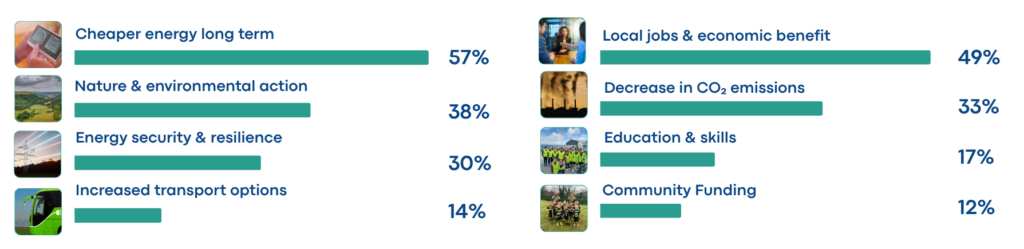
We’ve used this feedback to shape our application, ensuring maximum benefit for the local area, including…
Jobs & Economy
The wind farm will create local jobs during construction and operation, while our proposed Ti’r Isha Employment Zone will help bring and protect high-quality, long-term employment in the area.
As a proudly Welsh company, we keep profits in Wales, supporting Welsh workers, Welsh families, and the wider Welsh economy. The project will also generate business rates that help fund vital public services.

Education
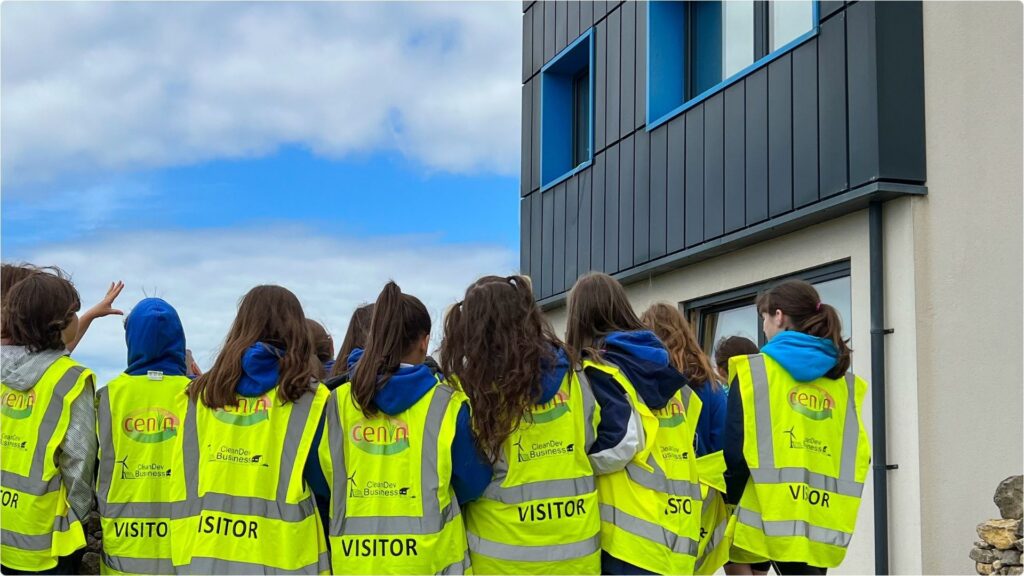
We believe education is key to the transition to a cleaner, electric future, which is why we provide free, curriculum-led visits to our Parc Stormy HQ for schools within 10km of our projects. We are delighted to have already welcomed hundreds of pupils from Bridgend schools, who have received a ‘hands-on’ learning experience from our award-winning team of renewable energy experts.
Community
We will deliver community value throughout the project’s 50-year lifespan, supporting and providing funding for local groups, initiatives, and new opportunities for local people.
We’ve been delighted to provide support for local gymnast Jade Evans who represents Bridgend & Wales in competitions around the world.

Environment
Our submission includes a unique Habitat Management Plan that will enhance, protect and improve the Common over the project’s 50 year lifespan, made possible with funding generated by the development.
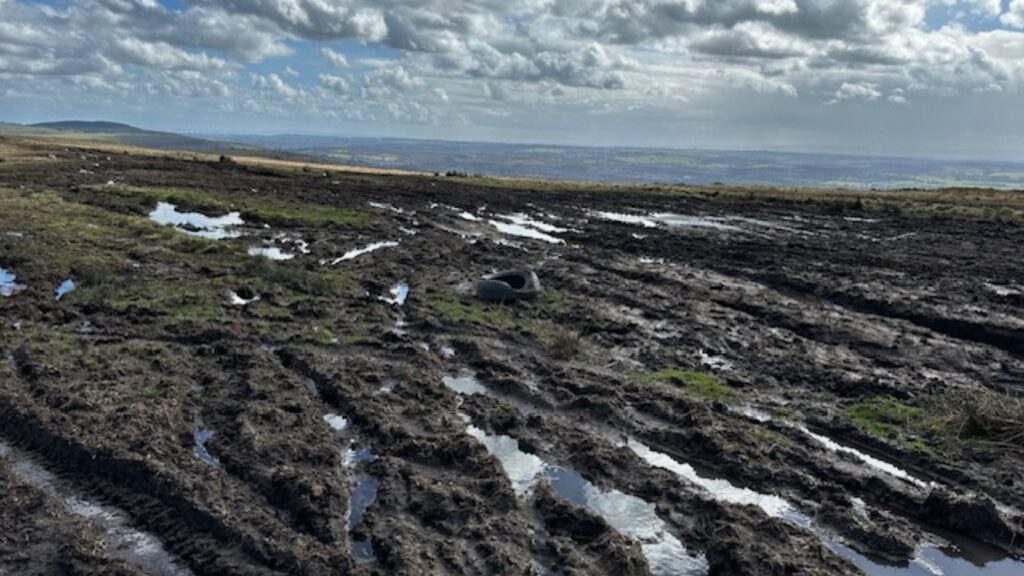
We are also collaborating with the Coity Wallia Commoners Association to not just improve Mynydd y Gaer Common, but all Coity Wallia Commons in Bridgend, including the restoration of large areas damaged by the use of unregulated 4×4 vehicles as shown in the picture.
Frequently Asked Questions (FAQs)
During construction, small areas of the Common will have restricted access for safety reasons, but once construction is complete all wind farm access tracks on the Common will be fully usable for walkers, cyclists and horse riders. We hope these tracks would enable people with mobility issues who currently can’t utilise the Common, to enjoy it in the same way as other users. We expect to see much greater use of Mynydd y Gaer Common as a result of the improved access that we will provide as part of this scheme.
The wind farm design has been created to avoid and minimise environmental impacts through the avoidance of sensitive habitats, e.g. wet heath, mires. Where avoidance is not possible, mitigation measures are developed to ensure that losses are minimised, and impaired habitats/features are restored.
Where possible, infrastructure has been sited on areas of lower biodiversity value, such as improved pasture and areas of dense bracken, and where feasible, access tracks have been sited along existing tracks or designed to avoid areas of higher value that cannot be easily recreated, replaced or reinstated.
There are 12 bat species within 2km of the proposal and no bat trees with roosting suitability are to be removed or felled as part of the proposed wind farm. Overall, the proposal site is likely to have lower suitability for foraging and commuting bats than more sheltered lowland areas in the wider landscape. Bat activity across the proposal site would depend on small-scale variations in vegetation and topography.
Areas outside the proposal site, to the north, south east and south west that include woodland edges, watercourses and woodland corridors provide more suitable areas for commuting and foraging bats. Even so, mitigation measures have been incorporated into the design for turbines that are proximal to vegetated features, or linear features (stone walls) that could be used by bats.
Multiple habitat surveys have been undertaken since 2021 in which 67 protected and/or notable bird species have been identified within 2km of the proposal. As a result, the following mitigation measures have been incorporated into the final infrastructure layout of the proposed development:
- The number of turbines has been reduced from 13 to 11 to reduce the potential impacts of collision mortality and disturbance or displacement from habitat loss.
- Turbine 3 was moved from its original position to avoid the herring gull flight activity recorded near the hilltop at Waun Wen.
- Turbines 1, 2, 4 and 9 have been sited away from unimproved acid grassland habitat where ground-nesting birds have been recorded breeding. The aim was to reduce the impacts and habitat loss on breeding skylark, meadow pipit and linnet. These four turbines have instead been proposed within areas of improved grassland where nesting habitats are less suitable.
- Turbines 5 to 10 would be constructed outside of the goshawk and red kite breeding season, from March to July, to reduce the potential impacts of disturbance/displacement.
- Bracken control would be carried out across Mynydd y Gaer Common to increase the extent of unimproved acid grassland, providing benefits for ground-nesting birds.
- Conservation management of Wern Tarw Woodland to create favourable conditions for woodland birds to colonise.
- Biodiversity enhancement measures within the Replacement Common Land, such as soft rush management, hedgerow enhancement, tree planting, and bird boxes.
Fungi studies were undertaken between 2023 and 2024, and information was obtained from the Glamorgan Fungus Group in 2023. More than 30 species of fungi have been identified within the proposed site, mostly comprising waxcap species.
Given the distribution and abundance information obtained, these assemblages are considered to be restricted to ‘hotspots’, with key locations being considerable extents of grazed acid grasslands in the northeast and the central part of Mynydd y Gaer. We’ve incorporated measures to avoid, minimise and mitigate impacts on fungi and restore conditions appropriate for their long-term maintenance.
Peat probing surveys were undertaken in October 2023, and these, together with inputs from all environmental topics, were taken into account in developing the design of the Project.
In November 2024, further peat probing was undertaken to identify any peat resources located within the refined project area. The peat probing data identifies that the majority of the area within the proposed development does not comprise any peat resources. The proposed developments’ impacts on soils, including peat resources, would be negligible.
Even so, a bespoke Outline Soil Management and Soil Resource Plan have been produced to ensure sensitive handling and storage of soil, particularly topsoil and soils associated with ancient woodland, including borrow pit areas.
The proposal includes three borrow pits, areas which are dug out to retrieve stone which can be used for the build. These areas are generally small with a minimised impact and are of little importance to site ecology or local residential amenity.
We have included a large safety margin so that we can generate sufficient fill material from within the site to ensure that only local material is used in the construction.
There is a proposed west borrow pit, south borrow pit and east borrow pit, and our aim is to use as many of the resources on site as possible. In the worst-case scenario, we predict a less than 5% aggregate import for more specialist use.
There are multiple mine entries recorded in the area of the site – both shafts and levels – but none of these are close enough to have any influence on ground stability. Even so, ground investigations are generally conducted post consent and before build, to confirm the final placements of the design of the development. Ground investigations are a planning condition and will get signed off by Bridgend County Borough Council.
Due to the wind farm proposal being on common land, we have to ensure that no land is being lost for the ability of grazing or well-being. Therefore, the application proposes 21.12 hectares (from turbines, tracks and crane pads – approx. 1% of the Common) to be removed from the Common, but 21.54 hectares will be added back into the Common, actually resulting in a net increase in common land.
Reducing the density of bracken on the Common will mean that previously inaccessible areas of the Common will be able to be accessed and grazed.
Construction would be 24 months and built in stages to limit effects. The general public/graziers can still use the Common as they currently do throughout the construction period, and public rights of way will still be accessible with temporary fenced areas opened as soon as practical.
Wind farm tracks will be open to the public and not fenced off, so they can be utilised by all legal users of the Common, ensuring its continued use as a place for wellbeing and improved quality of life.
The 132kv substation for the wind turbines will actually be placed down in the heart of Ty’n Y Waun Solar, so only a few electrical small cabins will be part of the wind farm. The grid connection will run down from Mynydd Y Gaer wind to Ty’n Y Waun Solar substation and all the way to Pyle substation.
Climate change represents the only possible mechanism that could potentially result in measurable changes to hydrogeology, through changes to the amount and distribution of recharge to aquifers.
On-site construction is appropriately audited, and a Construction Environmental Management Plan will be mandatory if the wind farm is approved before any work can commence.
An archaeological evaluation, geophysical survey and metal detector survey were undertaken to assess the survival of buried archaeological remains within the proposed wind farm. Three areas of the development area were subjected to geophysical survey and 47 trenches were excavated targeting areas of potential archaeology. A pit encountered close to the proposed site of Turbine 11, appears to be a late post-medieval quarry pit or similar and of low archaeological interest. Nearby evaluation trenches and a geophysical survey encountered little of archaeological interest on the ridge approach to the scheduled Mynydd y Gaer hillfort (GM084), suggesting low archaeological potential in this area.
The evaluation, geophysical survey and metal detector survey suggests there is little archaeological potential associated with the proposed site of Turbine 6, and no indication of a Second World War aircraft crash site. Ditches, banks, agricultural boundaries, drainage measures and quarries, were also found.
The turbines range in height, with 3 turbines measuring 180m, 7 turbines measuring 198m and one turbine measuring 230m.
The varied heights were designed for best practice, to reduce visual impact, and align with the topography of the mountain.
The proposal sits within the Pre Assessed Areas for wind outlined in Future Wales: The National Plan 2040, areas in which the Welsh Government has already modelled the likely impact on the landscape and has found them to be capable of accommodating development in an acceptable way. There is a presumption in favour of large‑scale wind energy development.
Other schemes approved with similarly sized turbines are Fforch Dwm wind farm in Neath/ Port Talbot and Alwen Forest in North Wales. Bigger turbines are more efficient than smaller turbines and produce a huge amount of power, meaning more energy is generated for less development and impact.
The assessment of operational noise has been undertaken through consultation with the appointed noise specialist for Bridgend County Borough Council and in accordance with the guidance report. Cumulative noise has been thoroughly assessed with nearby wind farms and noise monitoring ran from December 2024 to January 2025 at the 11 nearest properties.
During the detailed design of the scheme a comprehensive mitigation strategy would be developed to optimise the operation of the wind farm to achieve the best energy yield whilst also meeting the derived noise limits. There are many planning conditions to make sure wind farms are running within their noise limits, this would be audited by Bridgend County Borough Council.
The worst-case vibration levels from activities during build, concluded that vibration levels are unlikely to be perceptible to residents. Therefore, the risk of significant construction vibration impacts is very low. Operational vibration would be low, and therefore, given the separation distance of sensitive receptors, the risk of significant operational vibration impacts is very low.
There is no evidence of health effects from infrasound or low-frequency noise generated by wind turbines, and there is no robust evidence that low-frequency noise (including ‘infrasound’) or ground-borne vibration from wind farms generally, has adverse effects on wind farm neighbours.
Shadow flicker is assessed on a worst-case scenario approach that assumes no vegetation and with the turbines at the maximised visual position on a bright, clear, sunny day, 365 days a year. In the UK, actual sunshine typically occurs for approximately 30% of daylight hours, meaning that the modelling results represent a conservative estimate.
Even so, a shadow flicker impact control module will be fitted to each turbine prior to the operational phase. This will ensure if conditions are met to allow for shadow flicker to be experienced (i.e clear and sunny skies and suitable wind speeds), then the technical measures built into these modules for the specific turbine will be activated (i.e. a period of time the turbines are shutdown).
Currently the majority of a wind turbine’s parts can be recycled, and the industry is hopeful that by the end of the operation of this project’s generation (50 years) all parts will be fully recyclable.
A maximim of 2 years, the main part of the build will only take few months.
All schools within a 10km radius of the site have been offered a free school visit and free transport to our Parc Stormy site for a guided tour. Schools that have visited so far include:
- St Roberts Catholic Primary School
- Cefn Cribwr Primary School
- Llangewydd Junior Primary School
- Mynydd Cynffig Primary School
- Tremains Primary School
- Old Castle Primary School
- Pen y Fai Primary School
- Bryncethin Primary School
- Bewts Primary School
- Coitey Primary School
- West Park Primary School
Email visitus@cenin.co.uk for more information.
We are committed to supporting local clubs, groups and associations that support and enhance community well-being near our projects.
Through the development of the Bridgend Energy Hub we have so far been delighted to provide such support to:
- Heol Y Cyw Rugby Club
- Jade Evans (Tumbler)
- Heol Y Cyw Social Club
- U16 Boys National Basketball Squad
- Heol Y Cyw Welfare Hall
- Bridgend Male Voice Choir
- Bryncethin Community Group/ Pantry
Email renewables@cenin.co.uk for more information.
Current Project Status
The Pre Application Consultation period for Mynydd y Gaer Wind has now ended.
Our thanks to those that provided feedback on our plans, which we have now used to shape the full planning application which has now been submitted. You can still view the full, draft planning application and associated resources on our online consultation page should you wish to find out more about our plans.
You can view the progress of the application via the link below…

This project is being developed by CENIN, a Bridgend-based, family-owned business, specialising in the development of integrated energy systems.
Through our innovative approach to building these systems, we unlock greater potential to provide more value to local communities, increase wellbeing and ultimately leave Wales a better place for our future generations.